Insights

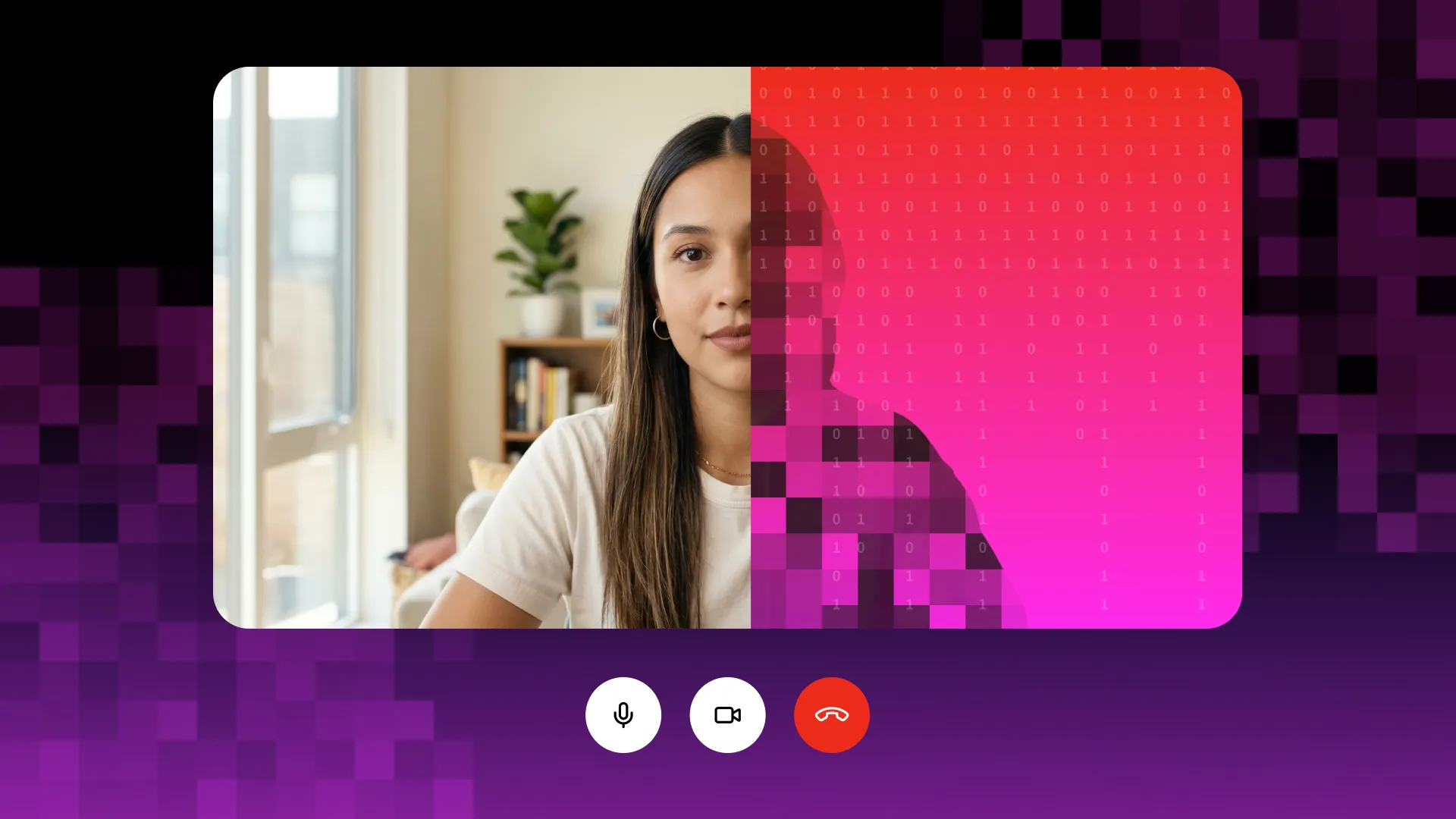
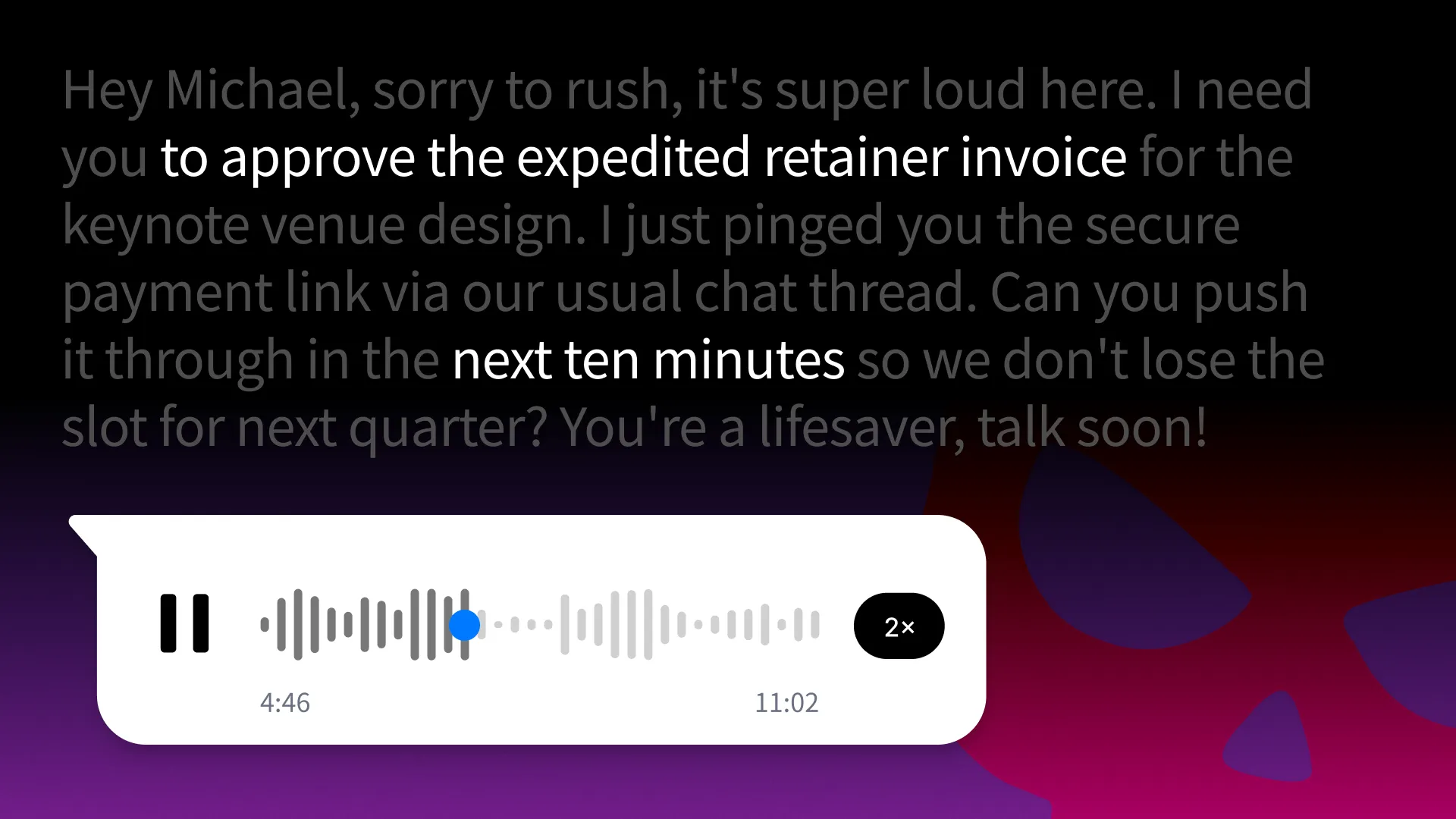
“Before we wrap, I need one thing handled right away.”
No one on the call questions it.
The face on screen is familiar. The voice is familiar too — slightly rushed, slightly impatient, exactly the way urgency usually sounds when it comes from leadership. A few people glance at each other, then back at their screens. Someone starts taking notes. Someone else is already opening the file.
This is how trust works in most businesses. It doesn’t announce itself. It moves discreetly, underneath the conversation, telling everyone in the room that this is normal, this is expected, this is real.
And that’s exactly what attackers are learning to imitate.
Deepfake cybercrime is no longer a novelty, a viral curiosity, or a fringe scam aimed at celebrities and consumers. AI-generated voices, fake executive video calls, synthetic phishing, and real-time impersonation are becoming practical attack tools. They’re designed to bypass the instincts people have relied on for years: I know that voice. I recognize that face. This sounds like something they would say.
For SMBs, the risk is especially sharp. Decisions happen quickly. Communication is informal. Verification is often assumed rather than enforced. For MSPs, the challenge is harder still: clients need stronger protection, but not the kind of enterprise-heavy security stack that adds cost, friction, and operational complexity to every workflow.
That’s the shift this new wave of attackers is exposing.
The question is no longer whether something looks suspicious.
It’s whether recognition still deserves to be trusted at all.

Deepfake Cybercrime Has Moved Into Everyday Business
Deepfakes used to feel like a problem for celebrities, politicians, or viral internet hoaxes. The distance is disappearing.
The same technologies are now being used in ways that fit naturally into everyday business communication. A voice that sounds like a founder asking for urgency. A video call that appears to come from leadership. A message that feels like it belongs in the middle of a routine, approval, escalation, or financial request.
That shift matters because these attacks don’t need to force their way into a workflow. They need to blend into one.
For SMBs, that’s where the risk starts to become practical. Many businesses run on fast decisions, informal collaboration, and a high degree of trust between leaders, employees, vendors, and clients. When a request sounds plausible and arrives in the right moment, the pressure to keep things moving often outweighs the instinct to slow down and verify.
This is what makes deepfake cybercrime more than a media story. It fits into the rhythms of how people already work.
A finance request can be approved because the voice sounds right. A file can be shared because the person on screen looks familiar. A password reset, wire transfer, or sensitive update can move forward because no one wants to be the one who delays something urgent from leadership.
The attack succeeds before malware ever enters the picture.
For MSPs, this changes the shape of the problem. Clients are no longer only dealing with suspicious emails or malicious links. They’re dealing with highly believable interactions that can trigger action inside normal business processes. That requires a different kind of defense—one that assumes trust can be imitated and verification has to be built into the workplace itself.
How AI is Weaponizing Trust
The most important shift is not that attackers can generate more content. It’s that they can now manufacture credibility at scale.
Older forms of impersonation usually depend on approximation. A fake email only needed to look convincing enough. A spoofed message only needed to create a moment of hesitation or confusion. Deepfake-enabled attacks operate differently. They’re built to reduce hesitation altogether.
AI changes the quality of deception in three ways.
First, it compresses preparation time. Voice cloning, synthetic video, and highly tailored phishing messages no longer require the same level of manual effort they once did. Attackers can move from publicly available data to a believable impersonation much faster than before.
Second, it increases precision. Public interviews, webinar appearances, social clips, executive town halls, and even routine video meetings give attackers raw material to work with. What used to be scattered digital exhaust can now be turned into something coherent: a familiar tone, a recognizable phrase, a speaking rhythm that feels authentic enough to disarm the target.
Third, it shifts the target from technical suspicion to social compliance. The goal isn’t always to fool someone into clicking a bad link. In many cases, it’s to get them to approve, transfer, share, reset, or disclose. That makes the attack less about technical trickery and more about manipulating the assumptions built into workplace communication.
This is why deepfake cybercrime matters so much for SMBs. Smaller organizations often depend on speed, access, and informal coordination to keep work moving. The more a business relies on quick verbal approval or familiar communication patterns, the easier it becomes for a realistic impersonation to create momentum before anyone pauses to verify it.
For MSPs, the challenge is broader than awareness alone. The attacks aren’t just more believable. They’re better aligned to the way modern businesses actually operate. That means the old model of “train users to be more suspicious” is no longer enough on its own.
Why Traditional Awareness Training is No Longer Enough
For years, security awareness training has been built around a practical idea: teach people to notice when something feels wrong.
Look for the strange link.
Question the unusual request.
Pause when the message seems rushed, inconsistent, or out of character.
That guidance still has value, but it was designed for a threat model where deception usually introduced visible friction. Something about the message, sender, or request often created a reason to stop.
Deepfake and AI-driven impersonation reduce that friction.
The problem is no longer limited to suspicious wording or obvious spoofing. In many cases, the interaction is persuasive because it fits the situation so well. The request arrives through the right channel, at the right moment, with the right tone of authority. Instead of standing out, it slips neatly into the flow of work.
That creates a ceiling for awareness training. People can be taught to slow down, but they can’t be expected to authenticate every voice, video call, or urgent internal request based on instinct alone. The more realistic the interaction becomes, the less reliable intuition becomes as a security control.
This is especially relevant in SMB environments, where communication is often fast and direct. Employees may work closely with leadership, know vendors personally, or handle sensitive tasks without multiple layers of review. In those settings, the strongest pressure is often not deception itself. It’s the desire to keep work moving.
That’s why modern defense can’t depend only on better skepticism. It has to create structured ways to verify identity before trust turns into action.
Why SMBs and MSPs Are Especially Exposed
The impact of these attacks is shaped by how smaller organizations actually operate.
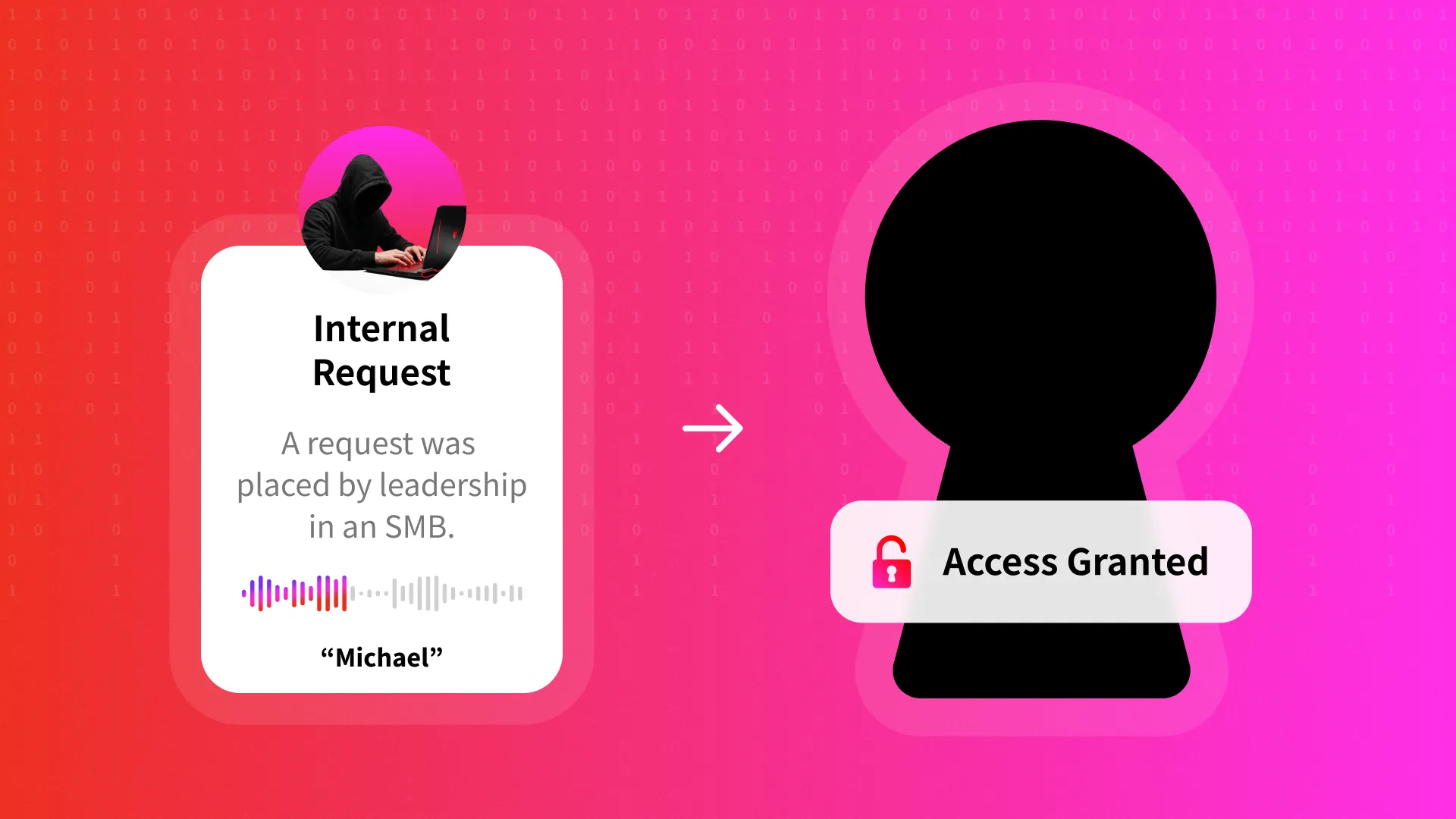
In many SMB environments, communication is fast, direct, and highly trust-based. A request from leadership may move straight to action without multiple approval layers. Finance, operations, and administrative staff often work closely enough with owners or executives that informal communication feels normal rather than risky.
That operating style has real business advantages. It also leaves less room for verification when a request feels urgent or familiar.
Security maturity adds another layer. Many SMBs don’t have dedicated teams responsible for identity governance, access review, or policy design across every communication and business system they use. Controls may exist, but they are often applied unevenly. One system may have stronger protections, while another depends more heavily on habit and trust.
This creates a difficult position for MSPs.
They are expected to strengthen client security across environments that vary widely in process, tooling, and risk tolerance. Some clients already understand the value of layered identity controls. Others are still operating with the minimum needed to keep work moving. Deepfake and AI-driven impersonation increase the pressure on both ends of that spectrum, because the problem is no longer limited to suspicious emails or poor password practices. It reaches into executive requests and ordinary business conversations.
The challenge is not only technical. It’s operational.
MSPs have to help clients introduce stronger verification and access controls without turning everyday work into friction-heavy processes. That balance matters even more in SMB environments, where cost, simplicity, and speed often determine whether a security measure is adopted at all.
What These Attacks Exploit
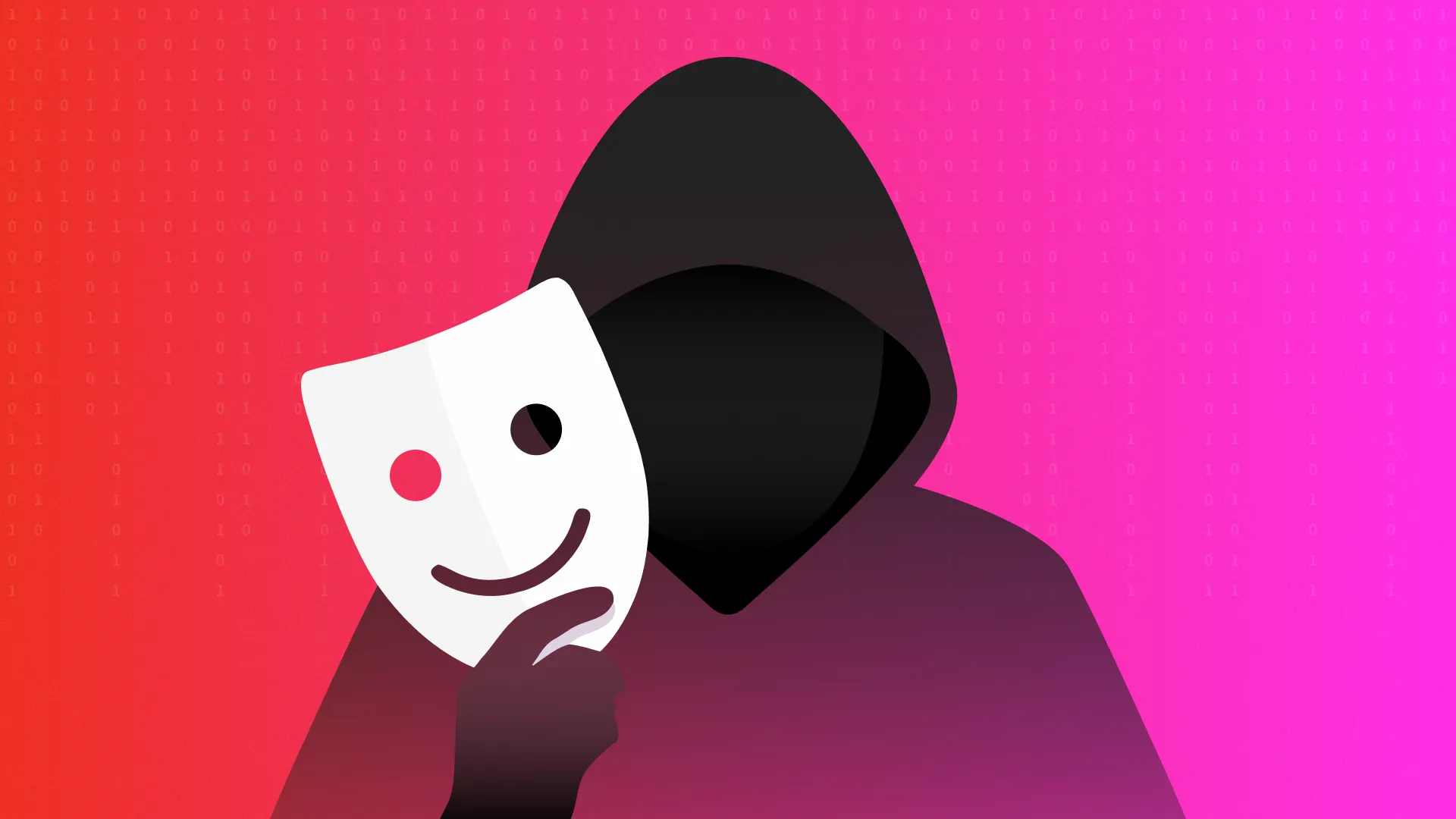
Deepfake and AI-driven impersonation campaigns succeed because they fit neatly into the parts of business culture that already run on speed and confidence.
Authority is one of the strongest examples. Requests from leadership often move faster than other forms of communication, especially when the issue appears time-sensitive or confidential. In smaller organizations, that effect is even stronger because the distance between executives and staff is shorter. People are used to responding quickly when a known leader asks for something directly.
Familiarity matters just as much. A recognizable voice, a common meeting format, or a request that resembles past behavior lowers the threshold for scrutiny. The target is not being asked to process something obviously strange. They are being asked to continue a pattern that already feels normal.
Process design can amplify that trust. Many organizations still rely on verbal approvals, informal confirmations, and communication habits that were built for convenience rather than verification. Those habits work well when everyone involved is genuine. They become fragile when realistic impersonation enters the picture.
Identity gaps create the final opening. Once a person is convinced to act, the next stop often moves quickly into something operational: entering credentials, approving a request, sharing access, resetting an account, or releasing information. If the systems behind those actions don’t require stronger verification, the social engineering phase translates directly into real access.
This is why deepfake cybercrime is not only a media or awareness problem. It exposes the points where trust, process, and access control meet. Wherever action can be taken on the strength of familiarity alone, the attacker has room to operate.

What Modern Defense Strategy Looks Like
Security policy has to assume that any interaction with someone we know, no matter how familiar, may no longer be a reliable source of authenticity.
That changes how defense should be structured.
The first priority is verification at the point where action becomes access. Sensitive requests, account changes, approvals, and privileged actions should require controls that stand independently of the conversation that led up to them. A familiar meeting, a persuasive call, or a convincing video should never be enough on its own to move directly into a password reset, payment approval or system change.
Multi-factor authentication remains central here. It adds layers of proof between a persuasive interaction and a successful login, reducing the chance that exposed credentials can be used immediately. Its value increases when it’s applied consistently rather than limited to only a few systems or users.
Device trust strengthens that model further. If access is tied to approved devices, an attacker still faces a meaningful barrier even after successfully manipulating a user. Credentials may be entered, but access can still be denied when the request comes from an endpoint the organization doesn’t recognize or trust.
Context matters as well. Requests that arrive from unusual locations, outside normal working patterns, or under unexpected conditions shouldn’t be treated the same way as routine access. Context-aware policies give organizations a way to add friction selectively, which is especially important in SMB environments where security has to remain practical.
Process design also needs to evolve. High-risk actions should have clear verification steps that don’t depend on recognition alone. That may mean secondary approval channels, documented confirmation procedures, or restricted workflows for administrative changes. The goal is not to slow everything down. It’s to make sure trust is supported by something stronger than familiarity. For MSPs, the challenge is to bring these controls into client environments in a way that improves protection without introducing enterprise-level complexity. The most effective strategy is usually the one that raises the verification standard while still fitting the pace and realities of how SMBs actually operate.
How HENNGE Identity Helps Reduce Deepfake and AI-Driven Impersonation Risk
The controls described above are most effective when they are applied consistently, not rebuilt from scratch inside each application or workflow. That’s where identity becomes practical rather than theoretical.
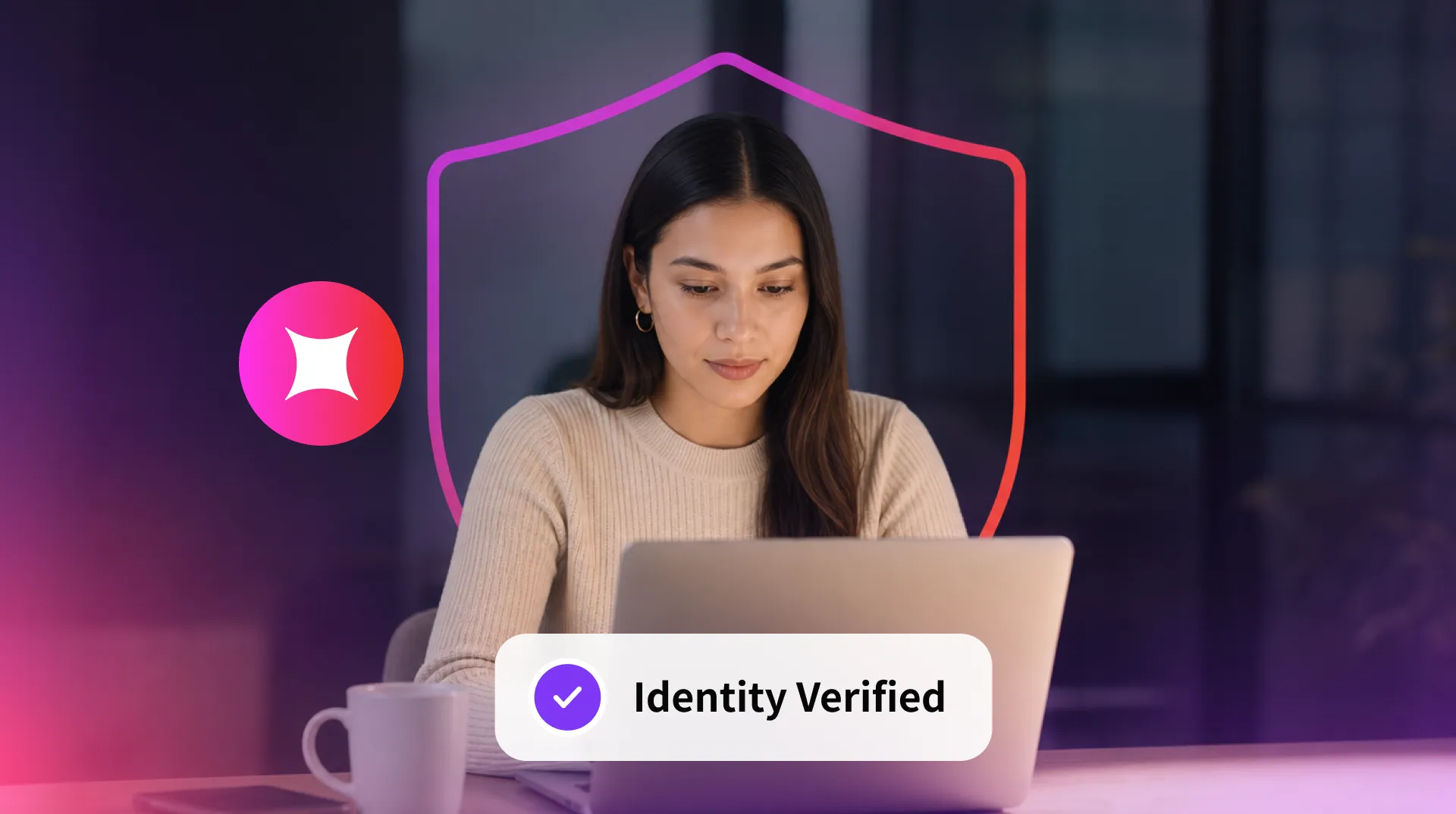
HENNGE Identity gives MSPs a centralized way to enforce stronger verification across Microsoft 365, Google Workspace, and connected SaaS environments without forcing SMB clients into the complexity of a larger enterprise stack. Instead of spending on each system to define its own authentication rules, access can be governed through a shared identity layer.
Multi-factor authentication is part of that foundation. When a user is persuaded by a realistic call, message, or video interaction, a password alone shouldn't be enough to complete the next step. Consistent MFA enforcement reduces the chance that a convincing impersonation immediately turns into account access.
Device certificates add a stronger signal of trust. Access can be tied to approved devices, which means valid credentials on their own don’t automatically grant entry. That matters in exactly the kinds of situations this blog is concerned with: a user may be socially engineered into taking action, but the attacker has to originate that action from a trusted endpoint. In practice, that creates a meaningful barrier between human error and system compromise.
Context-aware access policies help narrow that gap further. Authentication can be evaluated against conditions such as IP range or the time of the attempted log in. When a request arrives under conditions that don’t match normal behavior, additional verification can be required or access can be denied. This gives MSPs a practical way to raise the security standard without applying the same level of friction to every user, every time.
Structured user and group policies also matter. Sensitive actions shouldn't be equally available to every account with broad access. Clear role-based controls reduce the number of users who can carry out high-risk tasks and make it easier to align verification requirements with the sensitivity of the action being performed.
Logs provide the visibility needed to support that model over time. Authentication activity, access patterns, and unusual events can be reviewed across environments, giving MSPs a more consistent way to investigate whether a request fits unexpected behavior.
Taken together, these controls give MSPs a practical way to strengthen identity verification for SMB clients without adding the cost or operational drag of a more complex enterprise security model. In a threat landscape shaped by deepfakes and realistic impersonation, that balance matters.
Verification is the New Trust Standard
Deepfake cybercrime changes the assumptions that many organizations still rely on. A familiar voice, a recognizable face, or a request that fits the moment no longer provides the level of confidence it once did.
For SMBs, that shift creates a difficult reality. Fast communication and informal workflows are often part of what makes the business function well. For MSPs, it raises the bar for what the security has to account for. Protecting clients now means thinking beyond suspicious links and obvious phishing attempts. It means recognizing that trust can be imitated with increasing accuracy, and that familiar interactions can no longer carry the same weight on their own.
The response can't be to slow every process down or burden SMBs with enterprise-level complexity. It has to be more practical than that. Stronger identity verification, trusted-device requirements, and context-aware access controls give organizations a way to support modern work without leaving critical actions exposed to realistic impersonation.
That’s the direction this threat landscape is pushing security toward.
Recognition still matters.
Verification matters more.
If you’re looking for a practical way to strengthen identity verification for SMB environments, HENNGE Identity helps MSPs enforce stronger authentication, apply context-aware controls, and tie access to trusted devices without adding unnecessary complexity.
To learn more about how HENNGE Identity can help reduce the risk of deepfake and AI-driven impersonation attacks, contact us to start the conversation. You can also subscribe to the blog for more insights on emerging cybersecurity threats affecting MSPs and SMBs.