Insights


The request looks harmless.
A bookkeeper at a small business receives a voicemail from their CEO asking if they can take care of a quick transfer. The voice is warm and familiar. It thanks them by name and references a project they talked about earlier in the week. Nothing about it feels suspicious.
But none of it is real.
The voice, the urgency, the authority. All of it was manufactured. The message was generated by an AI model trained on public recordings, past meeting clips, and information pulled from the company’s website.
This is the reality SMBs are facing in 2026. AI can impersonate human communication with surprising accuracy, produce phishing emails that look exactly like vendor correspondence, and scan an organization’s SaaS environment in minutes. Attacks that once required time, skill, and preparation can now be launched by someone with a basic toolkit and a little patience.
For MSPs, this shift matters. Their clients are being targeted with threats that move faster and adapt more quickly than traditional defenses. SMBs rarely have the resources to filter, analyze, or respond to these attacks effectively. MSPs, with the security expertise and operational insight to defend against them, are uniquely positioned to stop them.
AI has not replaced cybercriminals. It has simply made them faster and far more convincing. Understanding how these attacks work is the first step to defending against them.
The Rise of AI-Assisted Cybercrime
Cyberattacks are not only increasing in number. They are becoming more convincing. AI has given threat actors a set of tools that can imitate human behavior, generate realistic content, and automate work that once required skill or patience. The result is a threat landscape where small businesses face attacks that disguise themselves as a genuine day-to-day activity and unfold at a speed they are not prepared to manage.
AI-Crafted Phishing That Looks Human
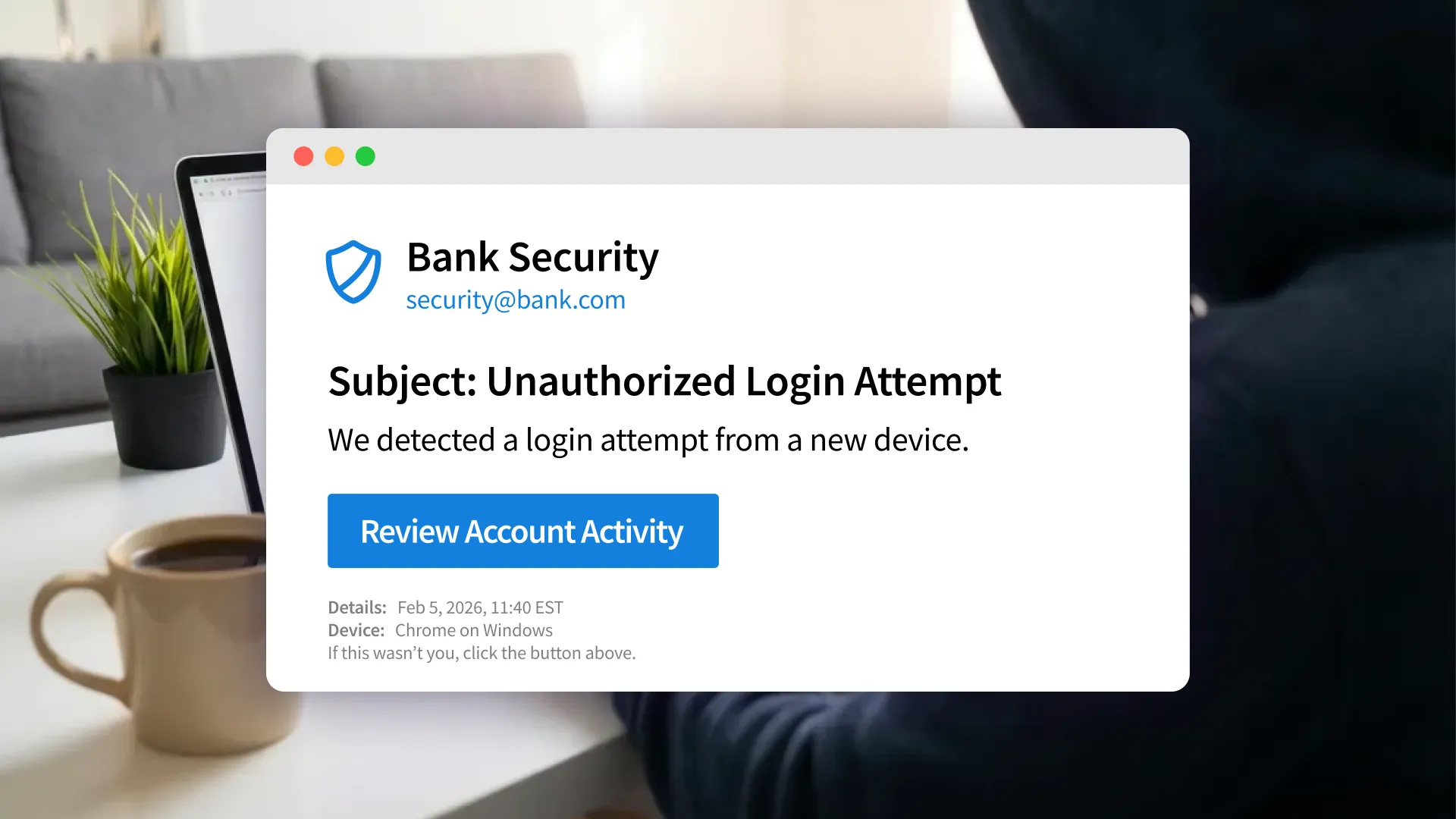
Phishing remains the most common entry point for attackers, but AI has changed how these messages look and feel. Emails generated by AI come with clean grammar, natural tone, and accurate formatting. Many even adopt the voice of a specific vendor or partner, drawn from public data or previous correspondence. These messages are harder to filter and even harder for users to spot, especially in busy SMB environments where people move quickly through their inbox.
Threat actors can now generate hundreds of variations of the same phishing lure, which makes traditional detection less effective. Filters that look for patterns or repeated content struggle when every email looks slightly different.
Deepfake Voice and Video Impersonation
AI can clone a person’s voice in a matter of minutes. Attackers can use this to impersonate executives, finance managers, or MSP technicians in phone calls, voice memos, and video messages. What used to require a skilled social engineer can now be created by a software that matches tone, cadence, and phrasing with surprising accuracy.
These deepfakes are often used to push fraudulent payments, authorize changes to bank details, or pressure employees into taking immediate action. Because the communication seems to come from someone the user trusts, the attack can succeed without any technical compromise.
Automated Reconnaissance Against SMB Tech Stacks
AI can also scan a company’s public footprint, cloud services, and SaaS applications in minutes. It gathers information about login portals, email formats, vendor relationships, and common workflows. Attackers then use this data to craft tailored messages that feel specific to a business rather than generic.
This automated reconnaissance makes SMBs particularly vulnerable. A small business using dozens of cloud applications creates a broad set of clues that AI tools can assemble into convincing attack paths. What once required time, effort, and technical skill can now be done quickly and at scale, which is why these attacks are becoming more common.
AI-Enhanced Credential Theft and MFA Bypass
Modern credential theft is no longer limited to password guessing or brute force attempts. AI supports a range of techniques that help attackers trick users into handing over their credentials or approving unwanted access attempts.
This includes:
Voice and text scripts generated to mimic legitimate support requests
Automated MFA fatigue sequences that increase the chance a user will approve a prompt
Phishing kits that proxy authentication in real time and capture verified session tokens
These methods allow attackers to skip traditional barriers and enter through the identity layer instead.
The Bottom Line
It’s not that attackers are becoming more sophisticated on their own. It’s that the tools they use are. AI gives them scale, speed, and believability, which puts SMBs under pressure and places MSPs squarely in the path of these threats. Understanding these AI-driven tactics is essential for developing a stronger, more resilient security foundation.

Why SMBs Are the Perfect Target in 2026
AI has changed how attackers choose their victims. In the past, cybercriminals often focused on larger organizations with valuable data or significant financial resources. Today, AI-assisted tools have lowered the cost of launching attacks, which makes small and midsize businesses far more attractive. They sit at a point where the defenses are light, but the potential impact is still meaningful.
Less Mature Identity Security
Most SMBs rely on basic authentication built into Microsoft 365 or Google Workspace. Many use a single password for multiple applications, and conditional access policies are often missing entirely. MFA may be turned on for some users, but not others, and there is rarely a broader Identity and Access Management (IAM) strategy to support it.
This leaves SMBs exposed to AI-enhancing phishing, deepfakes, and session hijacking. When an attacker only needs one successful login to compromise an entire business, weak identity maturity becomes a significant risk.
MSPs Become High-Value Gateways
Small businesses depend heavily on their MSP for guidance, access management, and incident response. This creates a concentration point that attackers understand well. Compromise one MSP account, and you may gain access to several client environments at once.
AI tools make this even more appealing for threat actors. Automated reconnaissance can identify which MSP supports a business, which tools they use, and what their documentation looks like. Once attackers understand the patterns, they can craft targeted phishing messages or impersonations designed specifically to deceive MSP technicians or their clients.
AI Gives Attackers a Scaling Advantage
AI allows attackers to launch hundreds of phishing attempts, deepfake messages, or credential harvesting campaigns without additional effort. They don’t need to staff a team or understand every detail of a target’s environment. The tools do much of the work for them.
SMBs, however, can’t grow their defenses at the same pace. They often rely on small IT teams with limited time and budgets. Once AI is involved, the gap between the speed of attack and and the speed of defense widens quickly.
Cloud and SaaS Sprawl Increase the Attack Surface
Most SMBs now depend on dozens of SaaS applications, each with its own login, permissions, and authentication settings. AI tools thrive in this kind of environment because every application becomes a potential entry point.
Shadow IT is also easier for attackers to exploit. When SMB employees sign up for apps without MSP involvement, it creates access paths that are rarely monitored and usually lack strong security controls.
The Bottom Line
SMBs represent an ideal combination of valuable access and limited defenses. Attackers know this, and AI makes it simple for them to reach into environments that lack strong identity protection or consistent access policies. MSPs now stand between SMBs and a volume of threats that continues to increase every year.
Why Traditional Security Tools Are Falling Behind
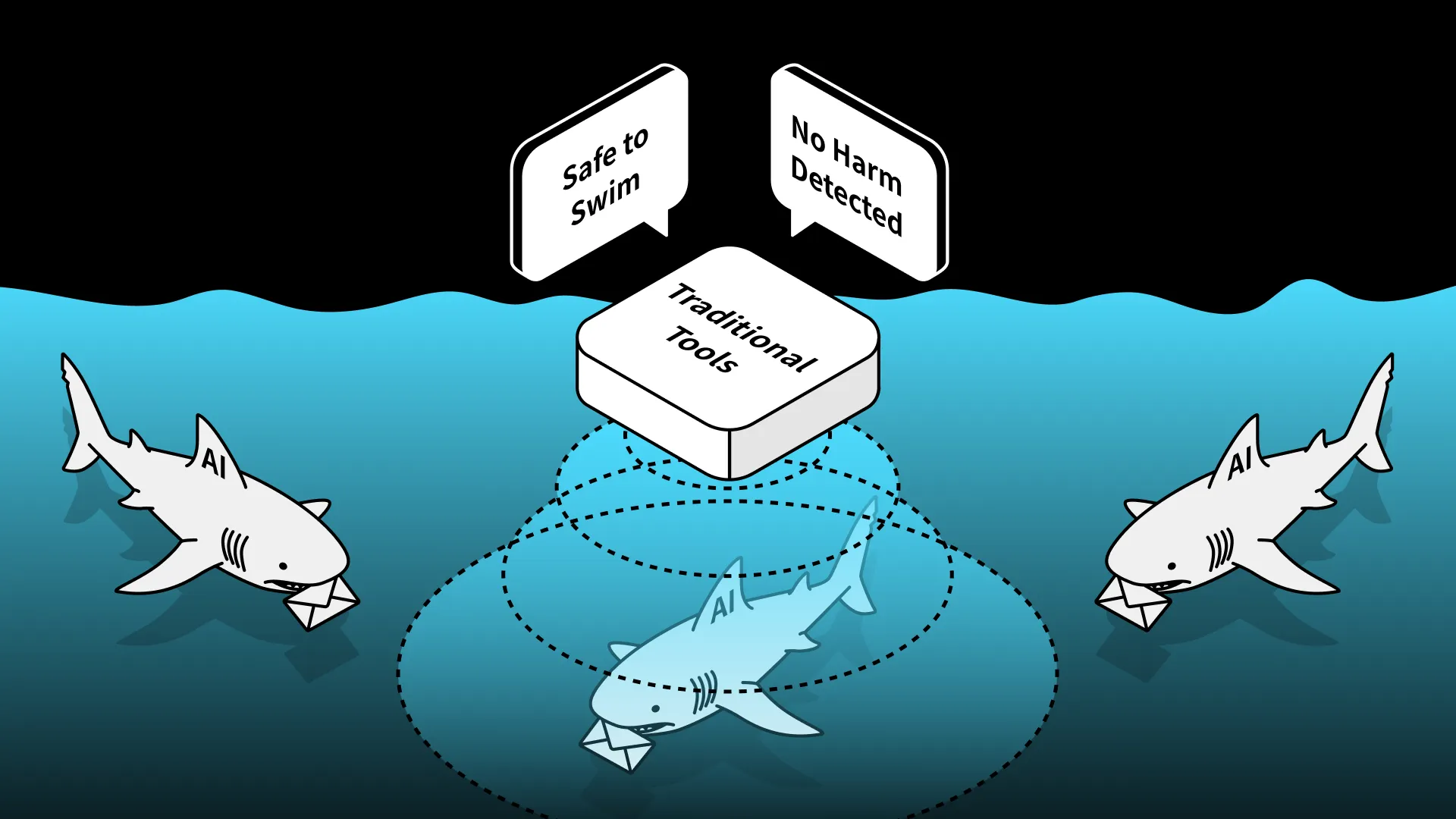
Many SMBs still depend on security tools that were designed for an earlier era of cybercrime. Email filters, basic MFA settings, and antivirus software were once enough to stop the majority of attacks. AI has changed that. Threats now move with more speed, accuracy, and variation than these older tools were built to handle.
Email Security Alone Can’t Stop AI Phishing
Traditional filters look for signs of phishing such as strange formatting, spelling errors, or known malicious patterns. AI-generated emails rarely contain these clues. They mimic vendor templates, adjust tone to sound like a specific person, and generate endless variations that slip past signature-based detection.
Even advanced filters struggle when every message is slightly different and appears to come from a trusted contact.
MFA Alone is No Longer a Guarantee
MFA remains important, but attackers have learned to exploit human behavior. AI tools can automate push bombing sequences or generate convincing scripts that prompt users to approve requests. Combined with AiTM techniques, attackers can intercept authenticated sessions rather than break through the MFA challenge itself.
When the user believes the prompt is legitimate, the barrier falls quickly.
No Cross-SaaS Visibility Makes Attacks Easier
Small businesses rely on different cloud applications, each with its own authentication process. Without a unified layer, MSPs must monitor each application separately. This patchwork approach creates blind spots that AI tools can identify and exploit.
Attackers look for weak links such as forgotten accounts, outdated MFA settings, and siloed login pages. All of these become entry points when visibility is fragmented.
Zero Trust Gaps Create Pathways for Attackers
Many SMBs haven’t adopted even the simplest zero trust principles. Device trust is inconsistent. IP range restrictions are rare. Access is often permitted by default rather than evaluated based on context. AI-powered tools take advantage of this by trying different routes until they find one that requires minimal verification.
These small gaps add up, especially in environments that have grown quickly without a formal identity strategy.
MSP Tools Are Not Optimized for AI-Scale Threats
MSPs often rely on systems built for single organizations rather than multi-tenant security operations. When identity incidents occur, technicians must investigate each client environment separately. AI-generated threats increase alert volume and variation, which makes this manual approach difficult to sustain.
Attackers understand that MSPs have limited time and must balance many competing tasks. Automation gives attackers more attempts than MSP teams can investigate with traditional tools.
The Bottom Line
AI has sifted the balance between attackers and defenders. Tools that once stopped the majority of threats now struggle to keep up with speed, scale, and realism. Without unified identity controls or contextual protections, SMBs remain vulnerable to attacks that bypass the safeguards they believe are already protecting them.
What MSPs Must Do Differently in 2026
AI-assisted cybercrime has changed the expectations placed on MSPs. It’s no longer enough to deploy basic security tools and respond when something goes wrong. MSPs must now assume that threats will be faster, more adaptive, and more convincing than in previous years. To keep clients protected, identity and access controls need to evolve alongside these attacks.
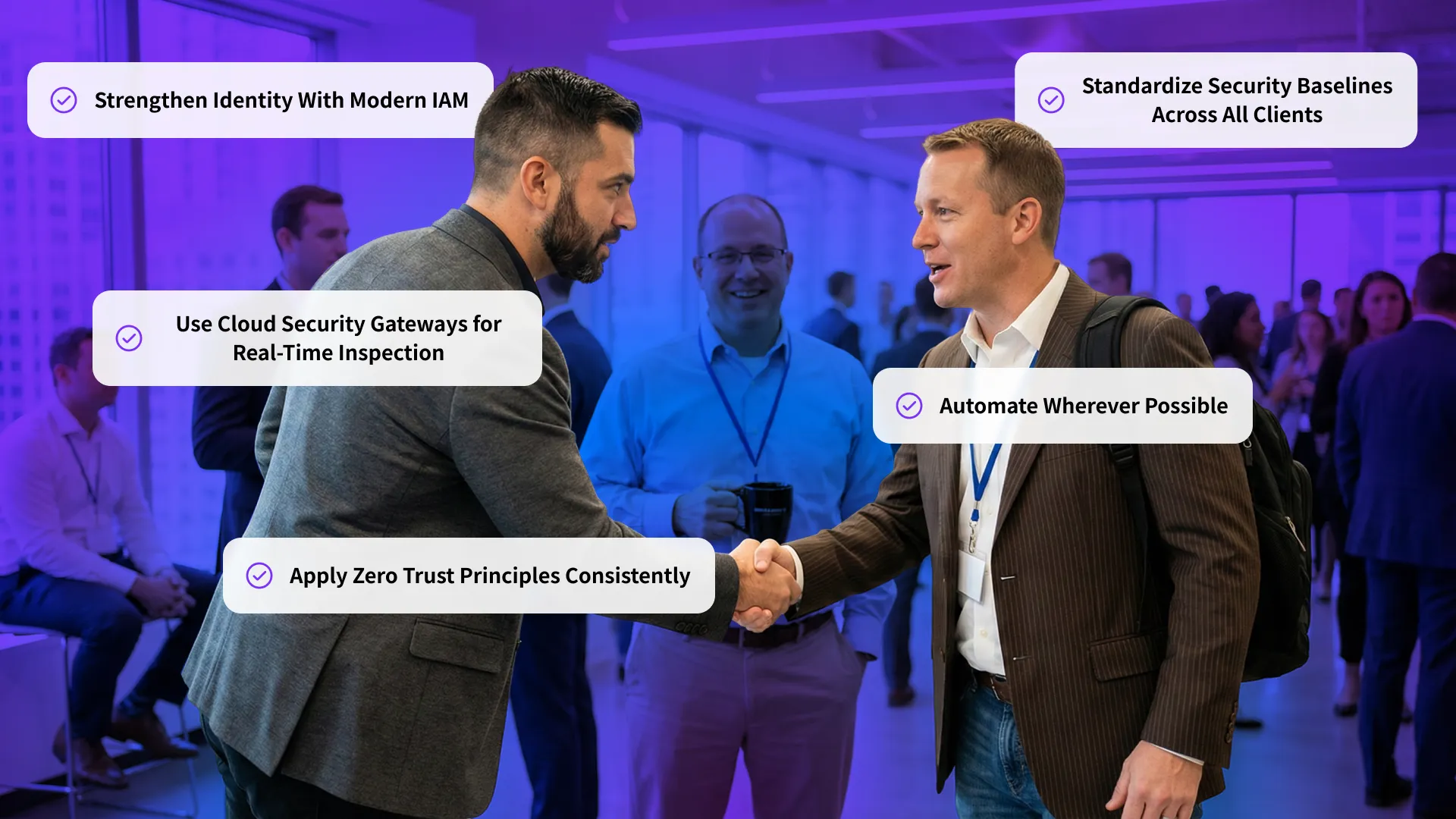
Strengthen Identity With Modern IAM
Identity sits at the center of most AI-driven attacks. Phishing, deepfake impersonation, and session hijacking all depend on manipulating how users authenticate. MSPs need to move beyond default identity settings and adopt modern IAM practices that include context-aware authentication, device trust, and centralized policy enforcement across cloud services.
This approach reduces the likelihood that a single compromised login can expose an entire environment.
Use Cloud Security Gateways for Real-Time Inspection
AI-generated attacks often bypass traditional filters by appearing legitimate. Cloud security gateways provide visibility into how users interact with SaaS applications and web content in real time. They allow MSPs to inspect sessions, restrict risky actions and block access when behavior deviates from expected patterns.
This layer is especially important for SMBs that rely heavily on cloud apps and browser-based workflows.
Apply Zero Trust Principles Consistently
Zero trust is not a product. It’s a way of thinking about access. MSPs should assume that no user, device, or session is trustworthy by default. Access decisions should be based on identity, device status, and context rather than network location alone.
Even basic zero trust measures, such as restricting access by IP range, requiring trusted devices, or limiting access by time of day, can significantly reduce the effectiveness of AI-assisted attacks.
Standardize Security Baselines Across All Clients
AI gives attackers scale. MSPs need it too. Standardizing identity and access policies across all clients helps reduce configuration gaps and speeds up response when issues arise. This includes consistent password policies, authentication methods, and access rules for common SaaS applications.
A standardized baseline makes it easier to spot anomalies and enforce security without reinventing the process for every client.
Automate Wherever Possible
Manual processes don’t scale against automated threats. MSPs should look to automate user lifecycle management, access provisioning, and policy enforcement wherever possible. Automation reduces human error and frees up time for higher-value work, such as threat analysis and client education.
In a landscape shaped by AI, operational efficiency becomes a security control in its own right.
MSPs need solutions that strengthen identity beyond default configurations while keeping day-to-day operations manageable. The ability to apply consistent access controls, add context to authentication, and scale identity protection across clients without increasing workload is what separates reactive security from a more resilient approach. This is where platforms designed for modern identity security begin to matter.
How HENNGE Helps MSPs Counter AI-Assisted Attacks
By this point, most MSPs recognize that AI-assisted cybercrime has outpaced the default security controls available to SMBs. The challenge is not whether stronger protections are needed, but how to introduce them without adding unnecessary complexity or operational burden.
HENNGE Identity is designed to sit in front of existing identity providers such as Microsoft 365 and Google Workspace, strengthening access control without forcing MSPs or their clients to replace what already works. It provides a unified cloud identity and access layer that helps MSPs address many of the weaknesses AI-driven attacks rely on.
Strengthening Cloud Identity Security at the Entry Point
AI-assisted attacks almost always begin at the identity layer. HENNGE Identity acts as a third-party identity provider, federating authentication away from default Microsoft and Google login flows. This introduces a distinct login experience and central control point that attackers can’t easily assume or reuse.
By applying consistent authentication policies across users and applications through a unified identity layer, MSPs reduce reliance on fragmented, app-specific settings. Combining single sign-on, MFA, and contextual access controls helps ensure that a single compromised credential is less likely to lead to a broader breach.
This approach raises the effort required for phishing, session hijacking, and social engineering attacks that target user authentication directly, especially those that depend on predictable or widely replicated login experiences.
Adding Context to Authentication Decisions
AI-generated attacks succeed when access decisions are binary and static. HENNGE Identity allows MSPs to incorporate additional context into authentication, such as device trust, IP range restrictions, and access timing. When something does not align with expected behavior, additional verification can be required or access can be restricted altogether.
This makes it harder for attackers to reuse stolen credentials or session tokens, even when users are tricked into approving a login.
Reducing Risk in Browser-Based Workflows
Many AI-assisted attacks unfold entirely in the browser, especially in SaaS-heavy SMB environments. HENNGE Identity includes secure browser capabilities that help MSPs control how users interact with web applications. This allows access to continue while placing guardrails around actions such as downloading files, copying sensitive data, or accessing internal web applications from unmanaged devices.
For MSPs, this provides a practical way to support remote work and BYOD scenarios without relying on VPNs or endpoint tools.
Scaling Identity Operations Across Clients
Managing identity across multiple SMB clients is inherently complex. HENNGE supports MSP workflows by enabling standardized identity policies and automated lifecycle management that scale beyond a single tenant. This helps MSPs apply consistent access controls, onboard and offboard users efficiently, and reduce the manual effort required to maintain security across a glowing client base.
As AI-driven threats increase in volume and variation, this operational consistency becomes critical.
Supporting a Zero Trust Access Model
HENNGE Identity aligns well with zero trust principles by treating identity, device and context as the foundation of access decisions. Rather than assuming trust based on location or network, MSPs can enforce access policies that continuously evaluate whether a session should be allowed.
This layered approach helps MSPs move beyond reactive security and toward a model that is better suited to modern, AI-assisted threats.
AI has accelerated cybercrime, but it hasn’t changed the fundamentals of good security. For MSPs, strengthening identity, enforcing zero trust principles, and applying consistent access controls remain the most effective ways to protect SMB clients against increasingly automated attacks. We’ll continue exploring how AI is reshaping the threat landscape and what it means for MSPs in upcoming articles. To stay informed, subscribe to our newsletter. If you’d like to learn how HENNGE can support your MSP practice, feel free to contact us anytime.